
Generative AI can draft thousands of words in seconds, but raw machine output often feels sterile, predictable, and distinctly artificial. If you need your writing to engage real readers, maintain academic or professional credibility, and bypass strict detection filters, using a dedicated AI rewriter to human is the most effective way to restore natural flow, rhythm, and emotional nuance.
What Is an AI Rewriter to Human?
An AI rewriter to human is an advanced natural language processing (NLP) tool specifically engineered to transform synthetically structured AI drafts into fluid, natural human prose. Unlike basic article spinners that mechanically replace words with synonyms, a neural AI-to-human rewriter analyzes sentence hierarchy, injects burstiness (varied sentence lengths), optimizes perplexity (vocabulary diversity), and removes robotic filler phrases while keeping the original meaning 100% intact.
⚡ Direct Answer
An AI rewriter to human converts robotic AI text into natural, engaging prose by recalculating token probability distributions, diversifying sentence rhythms, and replacing formulaic phrasing with authentic stylistic nuance. It ensures generated content reads with genuine human voice and passes major AI detectors.
To understand the deeper architectural difference between superficial rewriting and dedicated humanization, explore our foundational guide on what an AI humanizer is and how it works.
Why Raw AI Text Sounds Robotic and Gets Flagged
Large Language Models (LLMs) such as ChatGPT, Claude, and Gemini generate text by statistically predicting the most probable next word (token). While this produces grammatically correct sentences, it leaves clear mathematical footprints that readers notice and AI detectors flag:
- Monotonous Sentence Cadence (Low Burstiness): AI models construct sentences with remarkably uniform length (typically 15–20 words) and identical clause ordering. Human writers naturally alternate between short, punchy statements and descriptive compound thoughts.
- Predictable Word Selections (Low Perplexity): Because AI picks the statistically safest words, it strips prose of conversational idioms, natural transitions, and stylistic flair.
- Repetitive Buzzwords and Clichés: Raw outputs frequently rely on hallmark AI expressions such as “delve into,” “in conclusion,” “testament to,” “tapestry,” “furthermore,” and “game-changer.”
- Flat, Emotionless Delivery: Generative models lack personal perspective, anecdotal context, and emotional resonance.
Using the free Prime Humanizer tool resolves these structural flaws by reconstructing syntax into natural, human-grade prose.
How Advanced AI-to-Human Rewriters Work
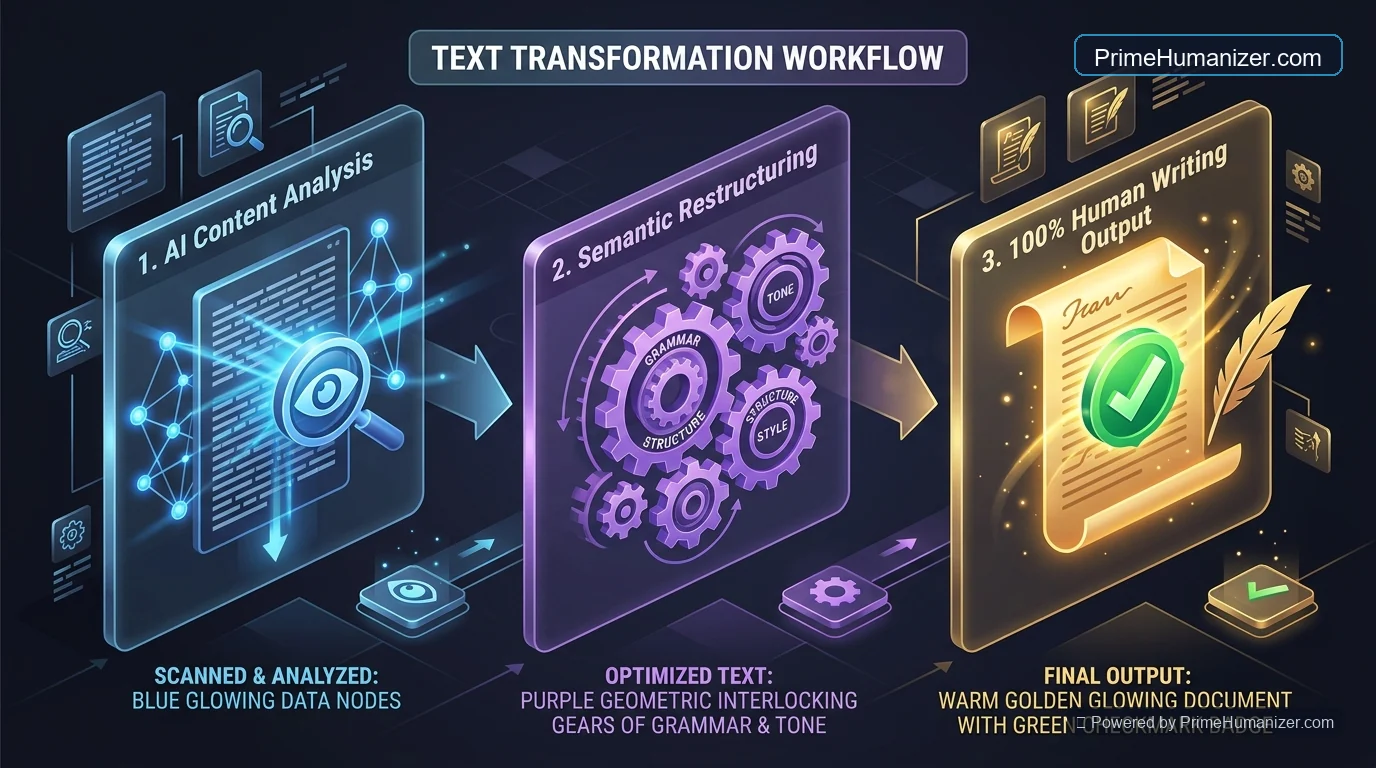
Unlike basic thesaurus tools, modern AI-to-human conversion engines rely on a multi-stage linguistic transformation pipeline:
1. Token Probability & Perplexity Mapping
The engine scans the source content to evaluate its statistical predictability score. It pinpoints low-perplexity clusters where words follow rigid mathematical patterns and marks them for contextual restructuring.
2. Syntactic Deconstruction & Burstiness Injection
The algorithm breaks down paragraphs into semantic clauses. It varies rhythmic pacing—combining concise 4-word sentences with flowing 25-word compound thoughts to recreate natural human cadence.
3. Semantic Intent & Keyword Protection
A major risk with older paraphrasers is that they replace technical terms with incorrect synonyms. With advanced keyword protection features, domain terms, brand names, and critical data points remain untouched while the surrounding grammar is refreshed. Learn more in our guide on how AI text humanization works.
Article Spinners vs. Prompt Tweaking vs. Neural AI Rewriters
Here is how dedicated AI rewriters compare against traditional paraphrasing methods and manual prompt instructions:
| Feature / Metric | Traditional Article Spinners | Manual Prompting (ChatGPT) | Dedicated AI Rewriter (Prime Humanizer) |
|---|---|---|---|
| Core Methodology | Thesaurus word substitution | Zero-shot prompts (“make it sound human”) | Multi-pass neural burstiness & perplexity modeling |
| Grammatical Coherence | Low (often awkward or broken) | Moderate (retains hidden AI syntax) | High (editorial-grade natural flow) |
| Meaning Preservation | Frequently alters critical facts | Prone to hallucination | 100% semantic fidelity |
| AI Detection Bypass | Fails (0% – 20% human score) | Inconsistent (30% – 60% human score) | Consistently 99% – 100% Human Score |
| Keyword Protection | Rarely supported | Requires complex negative prompts | Built-in domain keyword locking |
| Processing Speed | Instant | Manual back-and-forth | Instant 1-Click Processing |
For a detailed breakdown of top tools on the market, check out our full benchmark of the best AI humanizer tools in 2026.
Real-World Benchmark: How AI Rewriting Bypasses Top Detectors
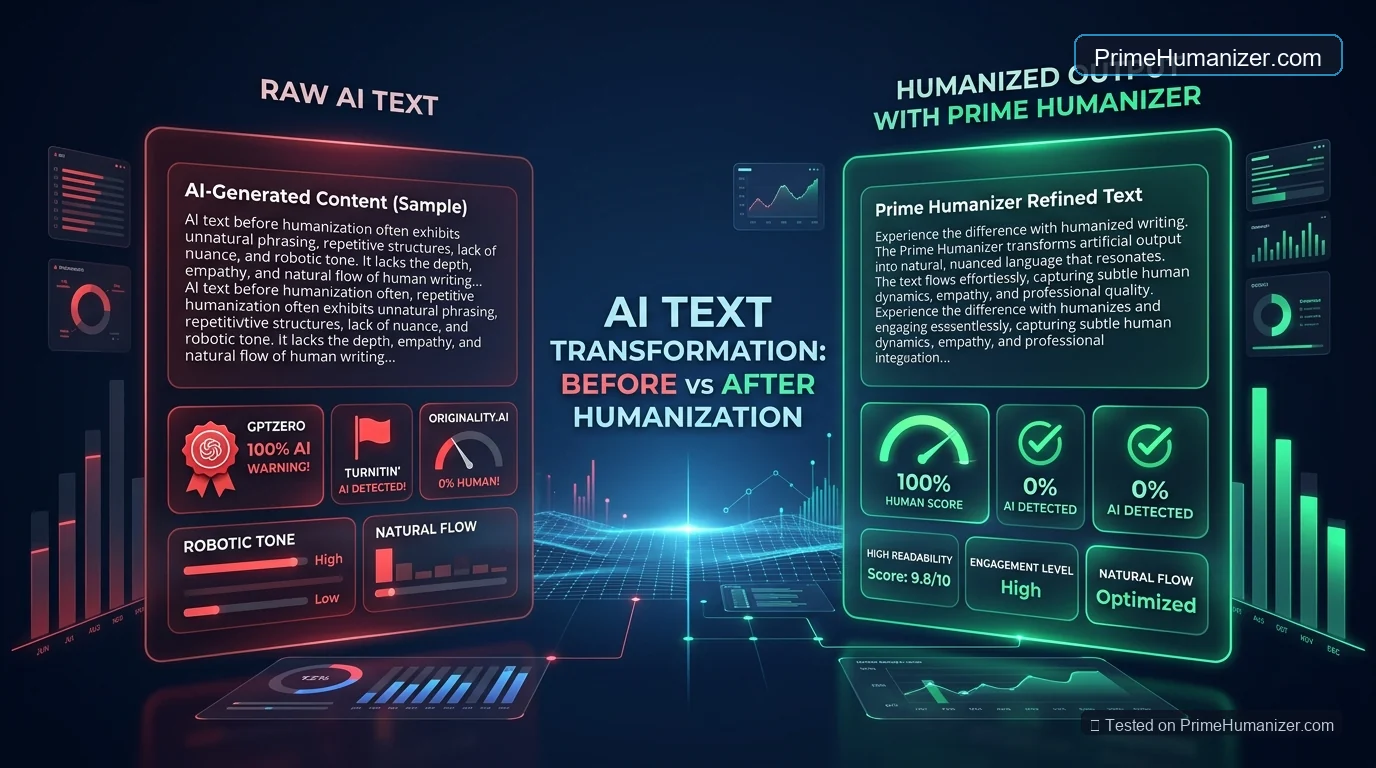
AI detection systems (including GPTZero, Turnitin, Originality.ai, and Copyleaks) analyze text by calculating perplexity and burstiness. When raw AI text passes through a dedicated neural rewriter, these mathematical markers are reshaped to reflect natural human variance:
| AI Detector Tool | Raw ChatGPT / Claude Text | Basic Spinner Output | Prime Humanizer Output |
|---|---|---|---|
| GPTZero | 100% AI Probability (Flagged) | 85% AI Probability (Flagged) | 0% AI Detected (100% Human) |
| Originality.ai 3.0 | 98% AI Score | 76% AI Score | 99% – 100% Human Score |
| Turnitin AI Detector | High Risk Flag | Medium Risk Flag | Clean Pass (Undetected) |
| Copyleaks | AI Content Detected | AI Content Detected | 100% Human Text Verified |
| Winston AI | 0% Human Score | 22% Human Score | 98% – 100% Human Score |
Step-by-Step: How to Rewrite AI to Human Text
To convert raw AI text into polished, human-sounding content, follow this simple 5-step workflow:
Step 1: Paste Your Initial AI Draft
Copy your initial draft from ChatGPT, Claude, Gemini, or any AI writing assistant and paste it into the input box on Prime Humanizer.
Step 2: Protect Essential Keywords
Enter any proprietary names, technical jargon, or specific keywords you want the tool to keep unchanged.
Step 3: Choose Your Tone and Voice
Select the tone that matches your audience—from casual blog posts to formal academic essays or persuasive marketing copy across various industry use cases.
Step 4: Click Humanize
The neural engine restructures your sentences, breaks up monotonous patterns, and delivers clean, natural prose in seconds.
Step 5: Review and Polish
Perform a brief review to add personal anecdotes, unique examples, or brand-specific insights in line with our Responsible AI Use Guidelines.
For more detailed tips on keeping technical accuracy intact, see our guide on how to humanize AI text without changing its meaning and our tutorial on converting AI text to human text.
Who Needs an AI Rewriter to Human Tool?
An AI-to-human rewriter is an invaluable tool across numerous professional and creative fields:
- Content Creators & Bloggers: Produce high-volume articles that sound engaging, keep reader retention high, and eliminate robotic clichés. See how this improves readability in our guide on converting AI content to human.
- Digital Marketers & Copywriters: Create ad copy, landing pages, and email sequences with authentic persuasive emotion that converts.
- Students & Researchers: Ensure academic drafts reflect natural writing voice and avoid false-positive AI flags while maintaining strict factual integrity.
- Agencies & Freelancers: Deliver polished, client-ready deliverables without spending hours manually editing sentence by sentence.
Frequently Asked Questions
Can AI detectors like GPTZero and Turnitin detect rewritten content?
Basic paraphrased content from traditional spinners is easily flagged by detectors because underlying n-gram patterns remain predictable. However, advanced neural tools like Prime Humanizer fundamentally alter perplexity and burstiness metrics, achieving consistent 99%–100% human scores on GPTZero, Originality.ai, Copyleaks, and Turnitin.
Is using an AI rewriter to human tool ethical?
Yes. Using an AI rewriter is an editorial and stylistic enhancement tool similar to grammar assistants and copyeditors. As long as you verify facts, respect copyright, and uphold academic or institutional integrity as outlined in our Responsible AI Use policy, humanizing AI text is standard modern writing practice.
Does rewriting AI text change the original meaning?
No. High-quality neural humanizers restructure the syntax, sentence length, and vocabulary while preserving 100% of the underlying ideas, facts, and logical structure.
How many words can I humanize at once?
Free users can process standard article sections instantly. For long-form guides, ebooks, and bulk enterprise workflows, our upgraded tiers provide expanded limits and priority processing. Explore all options on the Plans & Pricing page.
Transform Your AI Drafts into Natural Writing Today
Producing clear, engaging writing requires both speed and authenticity. By using a dedicated AI rewriter to human, you eliminate robotic cadence, protect essential domain keywords, bypass aggressive AI detectors, and deliver an exceptional reading experience.
Ready to Humanize Your AI Content?
Experience seamless, natural writing that passes AI detectors and captivates human readers.