
Direct Characterization Definition: Meaning, Examples & Indirect Differences (STEAL Method)
In literary analysis and creative writing, characterization is the method an author uses to reveal a character’s personality, values, and physical traits. Below is the complete guide to direct characterization, real literary examples, and how it differs from indirect characterization using the STEAL framework.
Direct Characterization Definition (Quick Answer)
Direct characterization (also known as explicit characterization) occurs when an author or narrator tells the audience exactly what a character is like through straightforward descriptive statements.
The Core Difference:
• Direct Characterization (TELLING): “Karen was an impatient, brilliant mathematician with a short temper.” (Explicitly reveals traits).
• Indirect Characterization (SHOWING): “Karen tapped her foot loudly, checked her watch for the fourth time, and solved the differential equation before the professor finished speaking.” (Shows traits through the STEAL framework: Speech, Thoughts, Effect, Actions, Looks).
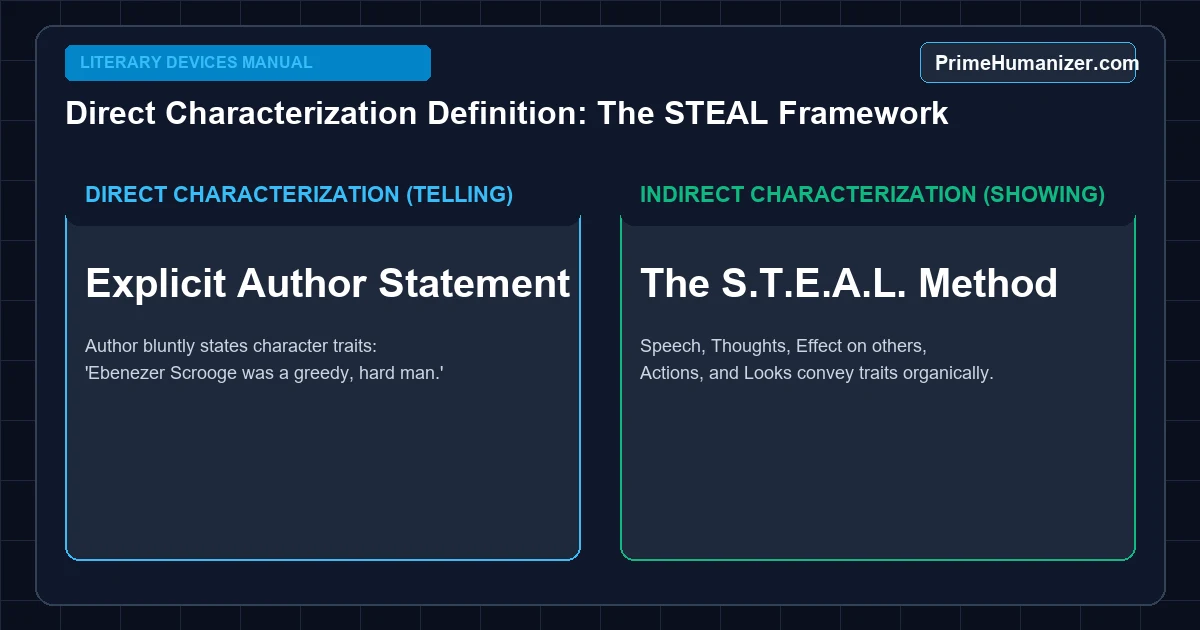
Figure 1: Direct Characterization (Telling) vs. Indirect Characterization via the STEAL Framework.
The STEAL Method for Analyzing Indirect Characterization
English teachers and literature professors frequently use the S.T.E.A.L. acronym to analyze character development:
- S – Speech: What does the character say, and how do they say it?
- T – Thoughts: What does the character feel, believe, or worry about internally?
- E – Effect on Others: How do surrounding characters react to their presence?
- A – Actions: How does the character behave in moments of crisis or conflict?
- L – Looks: What does the character’s clothing, posture, and appearance reveal?
Classic Literary Examples of Direct Characterization
- Charles Dickens (A Christmas Carol): “Oh! But he was a tight-fisted hand at the grindstone, Scrooge! a squeezing, wrenching, grasping, scraping, clutching, covetous old sinner!” → Direct narration of personality.
- F. Scott Fitzgerald (The Great Gatsby): “He was a blond, spiritless man, anaemic, and faintly handsome.” → Direct description of George Wilson.
When drafting character analysis essays, ensure proper formatting using our MLA Title Capitalization Rules and Essay Sentence Length Guide.
Frequently Asked Questions
Why do authors use direct characterization?
Direct characterization allows authors to establish essential character traits quickly, saving narrative time so readers immediately understand a character’s role before complex plot events unfold.