
Is “Are” Capitalized in a Title? The Definitive Verb Capitalization Guide
When capitalizing headings, book titles, or research articles, writers frequently hesitate over short three-letter words. While prepositions like “for” or “out” may be lowercased, the word “are” follows an entirely different rule. Below is the complete grammatical breakdown across APA, Chicago, MLA, and AP styles.
Quick Answer: Is “Are” Capitalized in a Title?
YES, “Are” is ALWAYS capitalized in a title. Under every major English style guide—including APA (7th ed.), Chicago Manual of Style (CMOS 17th/18th), MLA (9th ed.), and AP Style—all verbs must be capitalized in title case, regardless of their length.
Even though “are” contains only three letters, letter-count rules only apply to prepositions, conjunctions, and articles. Because “are” is a form of the linking verb “to be”, it is a primary part of speech and must never be lowercased in headline-style capitalization (e.g., “Why Dogs Are Man’s Best Friend”, “Where Are We Going?”).
One of the most persistent errors in headline and title formatting stems from the “short word myth.” Many writers, students, and content marketers remember a vague rule from grade school: “Don’t capitalize short words with three or fewer letters in titles.”
Operating on that assumption, writers routinely lowercase words like “is,” “are,” “was,” and “be”. However, this is a major grammatical mistake. English title case rules do not divide words solely by letter count; they divide words by grammatical category (parts of speech).
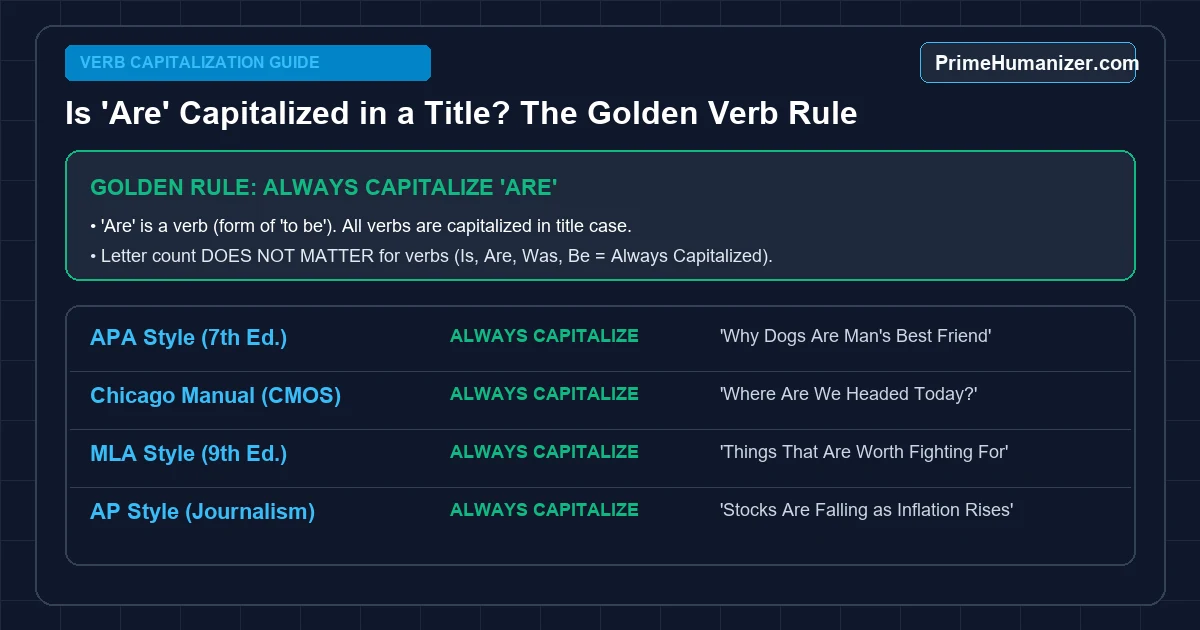
Figure 1: The Verb Capitalization Rule: Why “Are” must always begin with a capital “A” in title case.
The Golden Verb Rule: Why Word Length Does Not Apply to “Are”
In English grammar, words are categorized into two fundamental groups:
- Content Words (Major Words): Nouns, verbs, adjectives, adverbs, and pronouns. These carry the essential meaning of a sentence.
- Function Words (Minor Words): Prepositions, coordinating conjunctions, and articles. These build structural links between content words.
In title case (also known as “headline style”), all major content words must be capitalized. Verbs are the most important content words in the language. It does not matter whether a verb is fifteen letters long (“Conceptualizing”) or two letters long (“Is”, “Be”, “Do”, “Go”)—every single verb must begin with an uppercase letter.
Because “are” is the present-tense plural (and second-person singular) conjugated form of the copular verb “to be”, it is unequivocally a verb. Therefore, keeping “are” lowercase in a title violates the core principle of title capitalization.
Style Guide Breakdown: What APA, Chicago, MLA & AP Say About “Are”
Let us examine the exact specifications across the four authoritative style manuals used throughout academic, publishing, and digital journalism environments:
1. APA Style (7th Edition)
The American Psychological Association (APA 7th Edition) explicitly states in Section 6.17:
- Capitalize the first word of the title and subtitle.
- Capitalize all major words, including all verbs (including linking verbs like is, are, was, were, been).
- Capitalize all words of four letters or more.
- Lowercase short prepositions and conjunctions of three letters or fewer.
APA Verdict: Capitalize “Are” in all paper titles, dissertation chapters, and Level 1–3 headings.
Example: “Why Virtual Classrooms Are Reshaping Early Childhood Education”
2. The Chicago Manual of Style (CMOS 17th & 18th Editions)
CMOS rule 8.159 provides the gold standard for book publishers and humanities journals:
- Capitalize the first and last words of titles and subtitles.
- Capitalize nouns, pronouns, verbs (regardless of length), adjectives, and adverbs.
- Lowercase articles (a, an, the), prepositions, and coordinating conjunctions.
Chicago style specifically notes that linking verbs like be, is, are, was, were must be capitalized because they are verbs, not prepositions.
Chicago Verdict: Capitalize “Are” in every position within a title or subtitle.
Example: “Things That Are and Things That Seem to Be”
3. Modern Language Association (MLA 9th Edition)
The MLA Handbook (9th Edition) Section 1.2 rules for titles in academic essays and Works Cited entries require:
- Capitalize the first word, last word, and all principal words.
- Principal words include nouns, pronouns, verbs, adjectives, and adverbs.
- Lowercase articles, prepositions, and coordinating conjunctions.
MLA Verdict: Always capitalize “Are” in research papers, literary critiques, and bibliography citations.
Example: “Who We Are: Identity and Language in Post-Colonial Literature”
4. Associated Press (AP Style)
The Associated Press (AP) Stylebook is the editorial bible for journalists, news sites, PR wires, and digital marketers:
- Capitalize the first word.
- Capitalize all words of four letters or more.
- Capitalize all verbs, regardless of letter count (is, are, was, were, do, be).
- Lowercase prepositions and conjunctions of three or fewer letters.
AP Verdict: Always capitalize “Are” in headlines, subheadings, and news releases.
Example: “Interest Rates Are Holding Steady as Federal Reserve Meets”
Forms of the Verb “To Be”: The Complete Short-Verb Capitalization Matrix
The confusion surrounding “are” frequently extends to other short forms of the verb to be. Because English linking verbs are often two or three letters long, writers mistakenly treat them like prepositions. The table below clarifies the rule for every form:
| Verb Form | Part of Speech | Letter Count | Capitalization Rule | Title Example |
|---|---|---|---|---|
| Are | Linking Verb (Present Plural) | 3 letters | ALWAYS CAPITALIZED | “Why We Are Heading Toward AGI” |
| Is | Linking Verb (Present Singular) | 2 letters | ALWAYS CAPITALIZED | “Truth Is Stranger Than Fiction” |
| Was | Linking Verb (Past Singular) | 3 letters | ALWAYS CAPITALIZED | “How the West Was Won” |
| Were | Linking Verb (Past Plural) | 4 letters | ALWAYS CAPITALIZED | “The Way We Were” |
| Be | Infinitive Verb | 2 letters | ALWAYS CAPITALIZED | “To Be or Not to Be” |
| Been | Past Participle | 4 letters | ALWAYS CAPITALIZED | “Where Have You Been?” |
Real-World Examples: Correct vs. Incorrect Title Casing
To ensure you never make this mistake in your publications, compare these common headline pairs:
- WRONG: “What are the Best Practices for Writing an Essay?”
RIGHT: “What Are the Best Practices for Writing an Essay?” - WRONG: “Why Customers are Choosing Renewable Energy”
RIGHT: “Why Customers Are Choosing Renewable Energy” - WRONG: “Chances are, You’re Doing it Wrong”
RIGHT: “Chances Are, You’re Doing It Wrong” - WRONG: “Where We are Headed in the Next Decade”
RIGHT: “Where We Are Headed in the Next Decade”
Frequently Asked Questions (FAQ)
Why do people think “are” should be lowercase in titles?
Because many writers confuse short verbs with short prepositions (such as for, in, on, at, by) and short conjunctions (such as and, but, or, so). While prepositions of three letters are lowercased, all verbs—regardless of their length—must be capitalized in title case.
Is “are” capitalized in APA 7th edition headings?
Yes. Section 6.17 of the APA 7th Edition Publication Manual mandates capitalizing all verbs, including linking verbs (is, are, was, were), in paper titles and Level 1, Level 2, and Level 3 headings.
Is “are” capitalized in sentence case?
No. In sentence case (which is commonly used for APA reference list titles and European news headlines), you only capitalize the first word of the title, the first word after a colon, and proper nouns. In sentence case, “are” is written in lowercase unless it is the very first word of the title (e.g., “Are artificial intelligence detectors reliable in high-stakes testing?”).
Do you capitalize “are” in hyphenated words?
If “are” appears as part of a hyphenated compound (which is rare, e.g., “Are-You-Serious Reactions”), standard Chicago and APA rules require capitalizing both elements if each element would be capitalized on its own.
How does PrimeHumanizer help writers format headlines and polish content?
In addition to transforming robotic AI drafts into natural, undetectable human writing, the PrimeHumanizer AI rewriter tool enforces consistent capitalization and structural polish across all essay headings, research manuscripts, and SEO blogs.
Summary: The 1-Second Rule for Capitalizing “Are”
Whenever you are titling an essay, blog post, book, or video, remember this single rule: “Are” is a verb, and verbs are always capitalized.
Explore our related capitalization guides to master title casing: Is ‘for’ capitalized in a title?, Is ‘to’ capitalized in a title?, and APA Title Capitalization Rules.