
“To Each Their Own” Meaning: Origin, Examples & Grammar Guide (To Each Its Own?)
The common English proverb “to each their own” is used daily in conversation and literature. However, people frequently wonder about its exact origins, whether “to each his own” or “to each its own” is grammatically correct, and how to use it politely.
Quick Answer: What Does “To Each Their Own” Mean?
“To each their own” is a common proverb meaning that everyone is entitled to their personal tastes, opinions, preferences, and lifestyle choices, even if others find them unusual or disagree with them.
Grammar Note: Historically phrased as “to each his own” (derived from the ancient Latin phrase “suum cuique”), contemporary English universally prefers “to each their own” using the singular, gender-neutral pronoun “their”. The variation “to each its own” is grammatically reserved for non-human objects, animals, or machines.
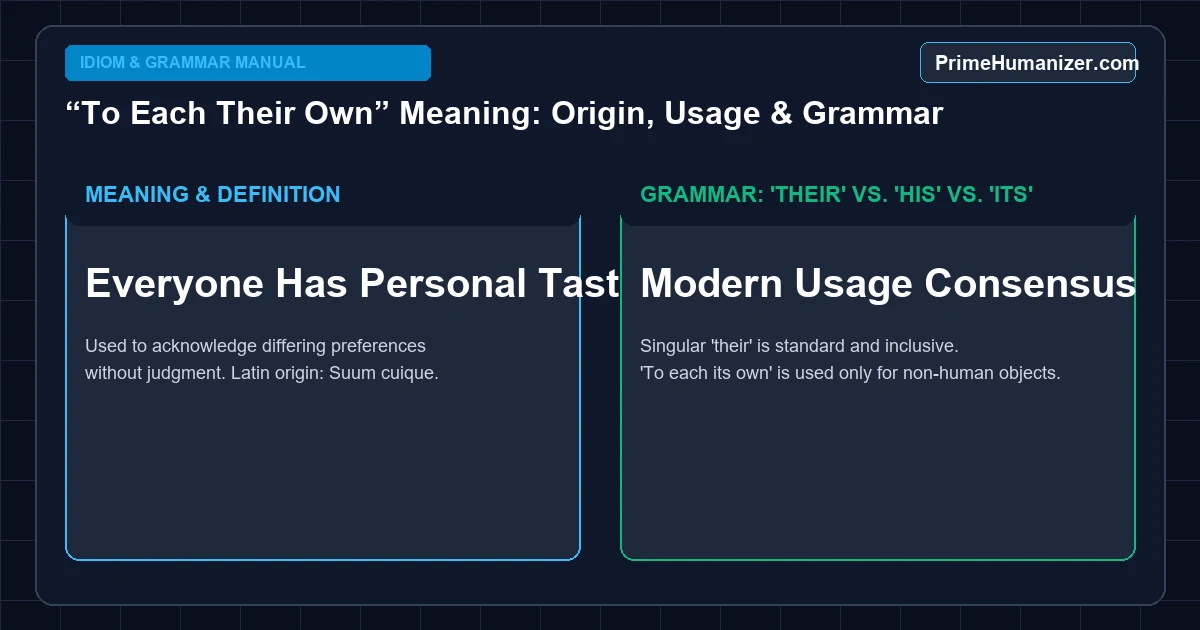
Figure 1: Meaning, origin, and pronoun usage for the proverb “To each their own”.
Etymology & Historical Origin
The philosophical concept behind the phrase traces back over two millennia to classical antiquity. In Latin legal and moral philosophy, the maxim suum cuique translated literally to “to each his own” or “may all get their due”. Famous Roman orators including Cicero used it in philosophical treatises regarding justice.
Shakespeare introduced an English adaptation in Hamlet (Act 1, Scene 3): “To thine own self be true.” Over centuries, the phrase evolved into modern idiomatic shorthand for tolerating individual quirks in music, food, fashion, and hobbies.
“To Each Their Own” vs. “To Each Its Own”
- When referring to people: Use “To each their own” (e.g., “I wouldn’t paint my bedroom neon yellow, but to each their own.”).
- When referring to animals or inanimate systems: Use “To each its own” (e.g., “Both operating systems have advantages; to each its own purpose.”).
When writing literary critiques or essays, explore our guide on How Many Sentences Are in an Essay?.
Frequently Asked Questions
Is “to each their own” considered rude?
No. It is typically a polite, diplomatic way to acknowledge differing opinions without sparking an argument.